Predict and remediate threats with a Security Model built for YOUR company.
AI-accelerated vulnerabilities continue to grow and overwhelm security teams, flooding their legacy tools with generic scores and static thresholds.
Only Empirical understands your unique environment, helping you predict and prioritize the exposures that only matter to your company – CVEs, misconfigurations, cloud security, and more.
Our Models
CloseFoundation
A global model that combines real-time internet exploitation telemetry with EPSS and monitors over 19,000+ exploited CVEs to help you prioritize and remediate threats.
Radiant
A custom built local model that uses everything in Foundation plus your own local assets, configurations, and internal telemetry to predict threats specific to your organization.
Our Models
Foundation
A global model that combines real-time internet exploitation telemetry with EPSS and monitors over 19,000+ exploited CVEs to help you prioritize and remediate threats.
Radiant
A custom built local model that uses everything in Foundation plus your own local assets, configurations, and internal telemetry to predict threats specific to your organization.
Why security teams choose Empirical
BEFORE
Teams ask “why are we prioritizing this threat?”
AFTER
A shared language for risk decisions
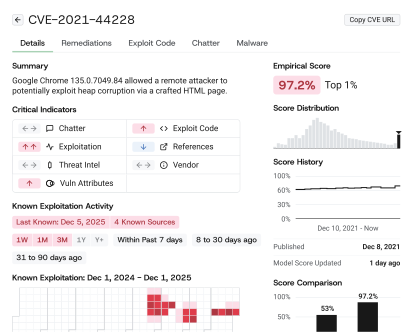
The Empirical foundation model grounds every prioritization decision in observable evidence. When someone asks "why are we fixing this one first?" The answer is a probability backed by real world exploitation telemetry, with critical indicators explaining the logic in real time.
BEFORE
Teams ask “why are we ignoring these vulns?”
AFTER
Your context changes the answer
A critical vulnerability behind a WAF with no internet exposure is not the same risk as a medium CVE on an unpatched, public-facing server running your payments stack. Generic models can't tell the difference. Our radiant model can because it trains on data only your environment produces.
BEFORE
Teams ask “what are attackers targeting in our environment?”
AFTER
We predict which vulnerabilities will be exploited in your environment.
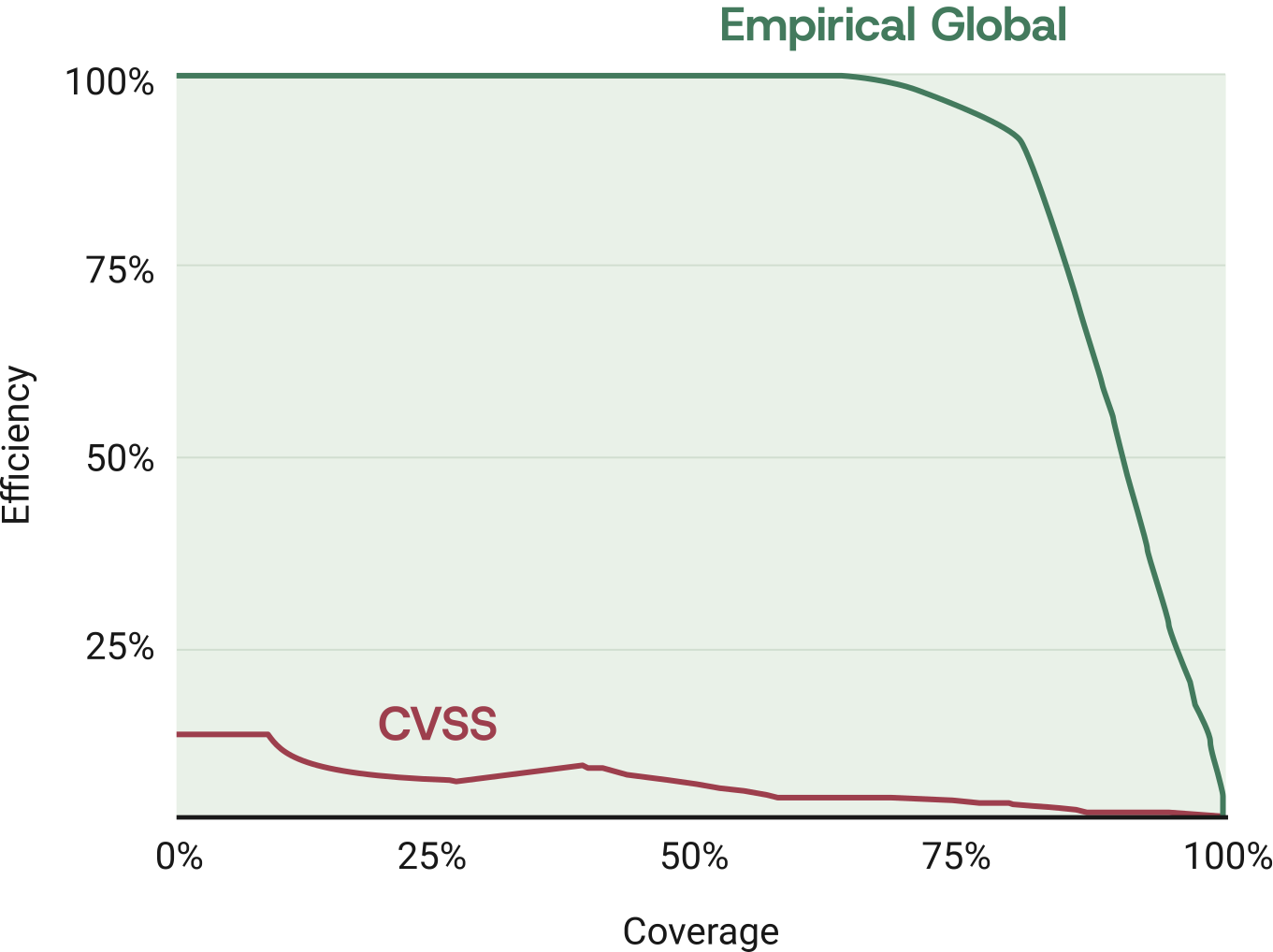
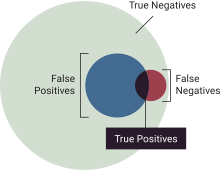
CVSS measures severity, and EPSS predicts global exploitation probability, but neither tells you what will be exploited in your environment next month. Our models answer this crucial question. We demonstrate higher coverage and efficiency than traditional methods or off the shelf models. When fixing a limited set of vulnerabilities our predictions catch more of what actually gets exploited and waste less effort on what doesn't. We publish the data to prove our performance.